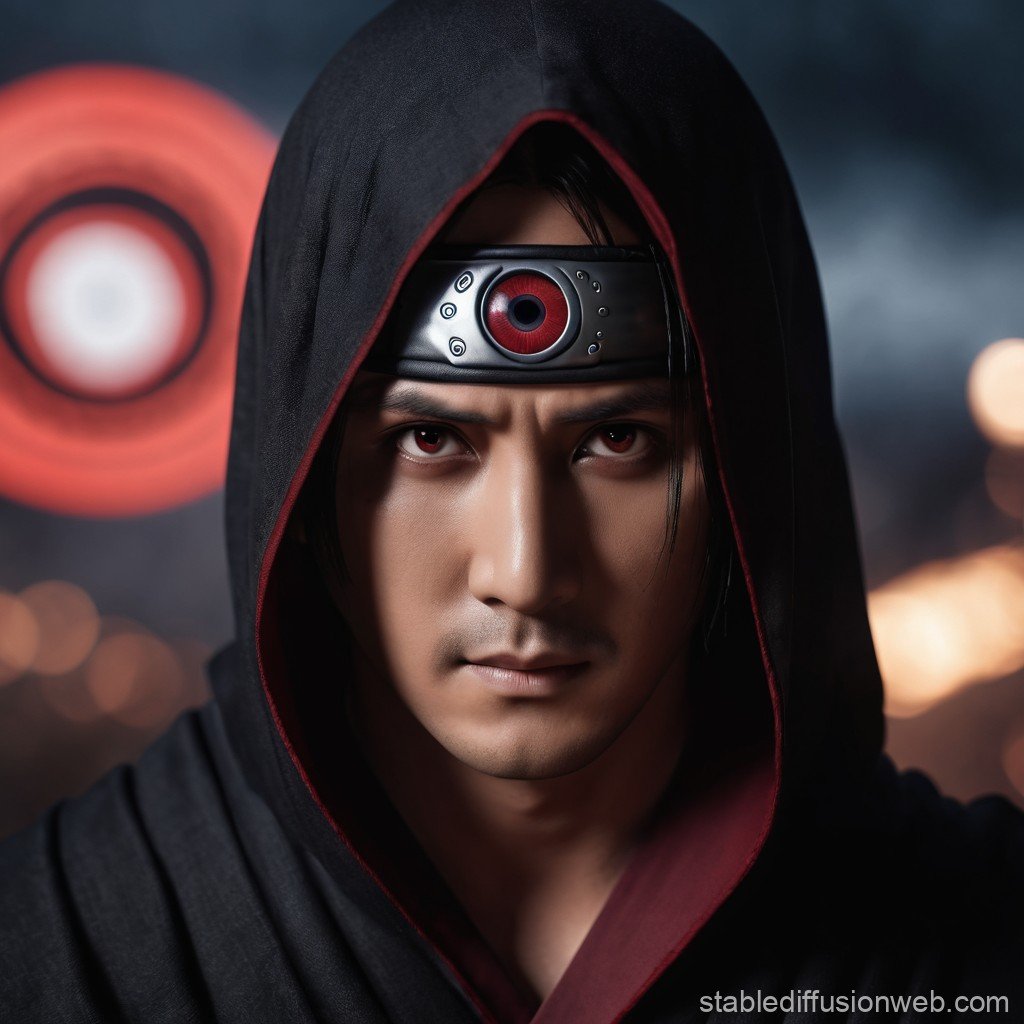
The internet loves a good crossover, and few characters spark as much intense debate and hypothetical scenarios as Naruto's enigmatic genius, Itachi Uchiha. When discussions turn to the visceral world of Chainsaw Man, a fascinating question emerges: How would Itachi, a master of psychological warfare, fare in a universe teeming with terrifying Devils? More specifically, how do his legendary mental attacks compare to the insidious, mind-bending horrors found within Tatsuki Fujimoto's dark masterpiece, particularly the chilling abilities of Cosmo?
This isn't about Itachi literally appearing in Chainsaw Man; it's about exploring the shared landscape of mental torture these two universes present. We're diving deep into the very essence of psychological destruction, pitting Itachi's infamous Tsukuyomi against Cosmo's unsettling "Total Understanding" to explain why one might just be more terrifying than the other. Prepare to witness the ultimate clash of mental manipulators, dissecting how each character shatters the human psyche in uniquely disturbing ways.
Itachi Uchiha's Tsukuyomi: A Masterclass in Personalized Mental Hell
Itachi Uchiha, the prodigal son of the Uchiha clan and the elder brother of Sasuke, carved his name into Naruto lore not just with his unparalleled ninja skills, but with his devastating genjutsu. His most fearsome weapon, the Tsukuyomi, is a chilling testament to his ability to inflict unimaginable psychological torment. Wielded through his Mangekyo Sharingan, this sensory illusion isn't just a trick; it's a direct invasion of the victim's mind, a "mental hellhole" where Itachi reigns supreme.
Imagine being trapped in a reality fabricated solely to break you. Itachi demonstrated this horrific power by subjecting the elite ninja Kakashi Hatake to a perceived 72-hour torture sequence in mere seconds of real time. Kakashi was bound to a cross, repeatedly stabbed by phantom Itachi clones, forced to endure endless agony. The psychological damage was so profound that Kakashi was rendered comatose, requiring days of recovery even under Tsunade's expert medical ninjutsu, and significantly longer to fully regain his mental faculties. This technique blurs the lines of sanity, making victims witness their "other selves" suffering the same fate, eroding their grasp on reality. To truly grasp the extent of this power, we invite you to explore Exploring the True Power and Terrifying Reality of Itachi's Tsukuyomi.
Cosmo's Total Understanding: The Existential Horror of "Halloween"
Shifting gears to the chaotic world of Chainsaw Man, we encounter Cosmo, a Devil Fiend who initially appears mentally deranged, her only utterance a repetitive, haunting "Halloween." Don't let her seeming simplicity fool you; Cosmo wields a power so existentially terrifying that it redefines psychological horror: "Total Understanding." This ability isn't about physical pain or even specific psychological torment; it's about the overwhelming, mind-shattering imposition of everything.
Cosmo unleashed "Total Understanding" on the formidable villain Santa Claus. Her victim was transported to a bizarre room, inundated with an "incalculable amount of books" – representing "every speck of knowledge in the cosmos." This entire universe of information was then forcefully uploaded into Santa Claus's mind. The result? A permanent mental alteration, leaving the victim capable of thinking and saying nothing but "Halloween." What makes Cosmo's power truly insidious is its widespread impact: Santa Claus was linked to numerous dolls across the globe, and every single one of them, instantaneously, also succumbed to the "Halloween" fixation. To unravel the deeper implications of this unique form of terror, we recommend Unraveling Cosmo's Total Understanding and Its Cosmic Horror.
The Cosmos of Mental Torture: Tsukuyomi vs. Total Understanding
When we place Itachi's Tsukuyomi and Cosmo's Total Understanding side-by-side, we uncover two distinct, yet equally potent, approaches to mental devastation. Both abilities are masters of mind-alteration, but they diverge significantly in their nature, impact, and ultimately, their capacity for unsettling horror. This comparison forms the heart of understanding "Itachi Uchiha in Chainsaw Man" through the lens of mental torture. To dive deeper into this fascinating clash, consider reading Cosmo and Itachi: A Clash of Mental Manipulators.
- Tsukuyomi: This is personalized, intense suffering. Itachi actively crafts a specific, horrific experience designed to break the victim through extreme pain, fear, and disorientation. The "why" behind the torture is clear: Itachi's choice, his goal, his malice. Victims endure immense trauma, but there's an implied possibility of recovery, a return to their former self, albeit scarred. The scope is primarily single-target, a concentrated attack on one mind.
- Total Understanding: This is overwhelming, indiscriminate knowledge leading to a permanent, inexplicable mental singularity. It's not about what Itachi wants you to suffer; it's about the sheer, unfilterable everything reducing you to nothing but a single, nonsensical word. The "why" for the "Halloween" outcome remains a mystery, making it profoundly more unsettling. There is no recovery; the former self is gone, replaced by an empty shell. Furthermore, its ability to globally affect linked entities demonstrates a broader, more insidious reach than Tsukuyomi's single-target nature.
Why Cosmo's "Total Understanding" is Arguably More Unsettling
While Itachi's Tsukuyomi is undeniably agonizing, Cosmo's "Total Understanding" taps into a different, arguably deeper, vein of horror. Tsukuyomi inflicts a torturous experience, but the victim's identity remains intact, albeit severely traumatized. They are still themselves experiencing torment. With Total Understanding, the victim's very essence, their ability to process, reason, and communicate, is eradicated. They become a living husk, a permanent echo of a single word, their consciousness drowned in the cosmic deluge of information. There is no regaining sanity, no returning to who they once were; only the haunting, inescapable repetition of "Halloween." This loss of self, coupled with the inexplicable nature of the outcome and its global, instantaneous spread, makes Cosmo's power a brand of cosmic horror that transcends mere torture. It's an existential annihilation.
How Itachi Uchiha Could Fit Into Chainsaw Man's Dark World (Hypothetically)
Given the distinct flavors of mental manipulation, how might Itachi Uchiha, or at least his abilities, translate into the world of Chainsaw Man? While a literal crossover is unlikely, the concept allows for fascinating "what if" scenarios. Imagine Itachi as a human with a contract with a mental-manipulation Devil, perhaps even a "Genjutsu Devil" or "Illusion Devil," granting him powers akin to his Sharingan.
In such a world, his Tsukuyomi would be an ultimate weapon against Devils, capable of incapacitating even powerful entities by trapping them in their own minds. However, he would also face opponents like Makima, whose own control and manipulation abilities are legendary. The question of who would prevail in a mind-to-mind battle between these two titans is a thrilling one. For a deep dive into that very concept, check out Itachi Uchiha vs. Makima: Who Wins the Mind Game?. Imagining Itachi operating within the Public Safety Devil Hunters, his ruthless efficiency and strategic brilliance could be a terrifying asset, but his methods would undoubtedly clash with other hunters. To explore more about his potential integration, consider How Itachi Uchiha Could Fit Into Chainsaw Man's Dark World.
The Psychological Toll: Understanding Mental Damage in Anime and Manga
Both Naruto and Chainsaw Man excel at portraying the profound psychological toll of conflict and supernatural abilities. Itachi’s Tsukuyomi demonstrates the brutal reality of sustained psychological torment, leading to comas and long-term recovery. Cosmo’s Total Understanding, on the other hand, highlights a more insidious form of mental damage – the complete obliteration of personality and identity. These narratives don't just show physical battles; they delve into the fragility of the mind itself, revealing how easily it can be shattered, corrupted, or simply erased. Understanding these different forms of mental damage enriches our appreciation for the storytelling in both series. For a comprehensive look at how these narratives portray the mind's vulnerability, we recommend The Psychological Toll: Understanding Mental Damage in Chainsaw Man and Naruto.
The "Itachi Uchiha in Chainsaw Man" discussion, therefore, isn't about finding him hidden in the background, but about appreciating the diverse and terrifying ways these two iconic series explore the absolute limits of mental torture and psychological warfare. It's a testament to the creators' genius that they can evoke such profound existential dread and trauma through their unique abilities, leaving readers to ponder the true horrors that lie within the human (and devil) mind.